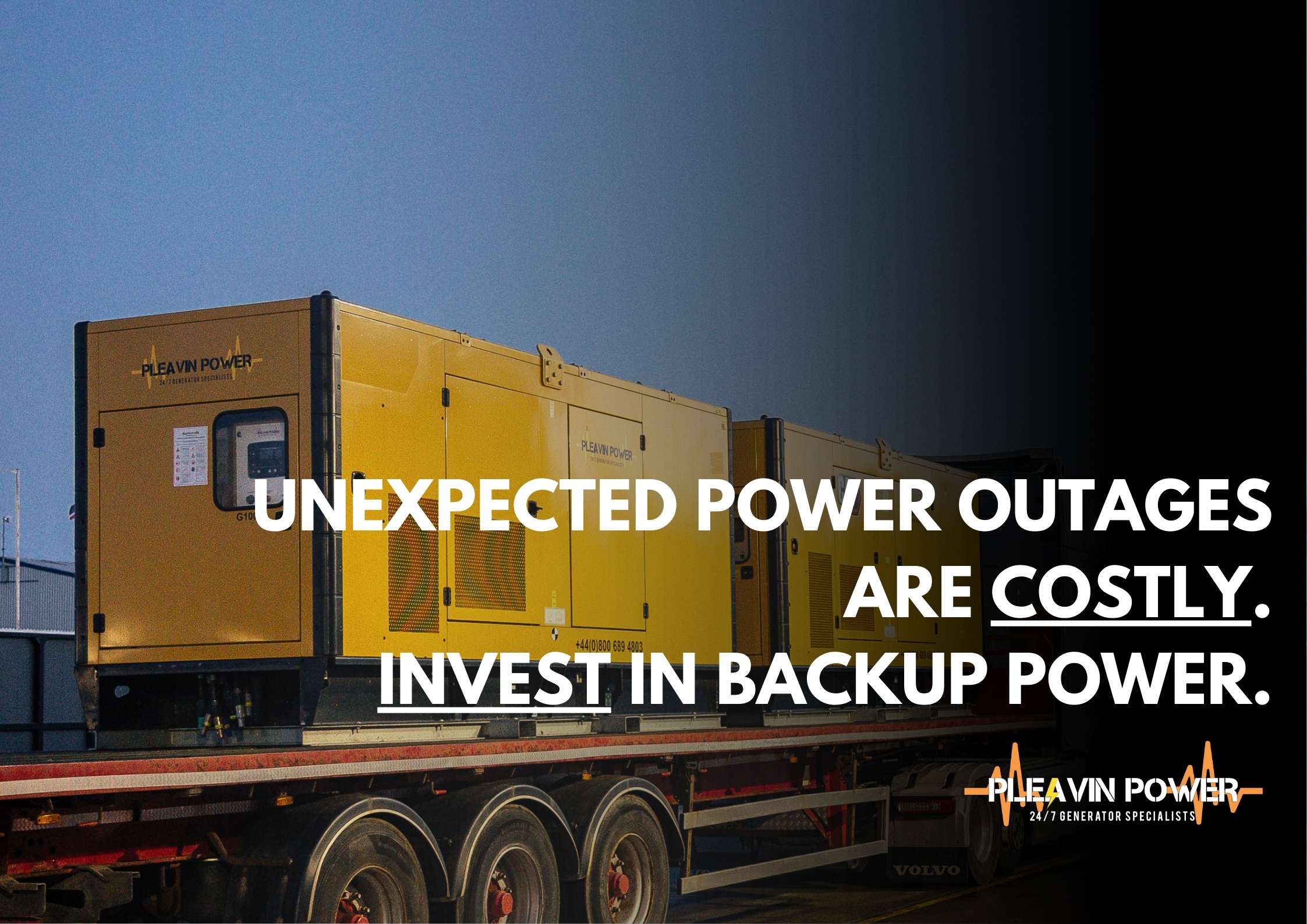
For businesses across the world an unexpected power outage is costly.
A large business could see a loss in the tens of thousands per hour of the outage, with research showing that a typical single outage lasts an estimated 2.5 hours. When Google lost its power in 2013, it experienced losses of £100,000 per minute!
Unexpected outages cause significant financial and operational burdens for businesses, ranging from immediate revenue loss to long-term reputational damage. Costs incurred can include:
- Spoiled goods: Loss of perishable stock in refrigerated units
- Wasted wages: Paying staff who are unable to work
- Equipment damage: Power surges and abrupt shutdowns can damage, or even destroy IT servers, machinery and electronic equipment
- Emergency recovery: Overtime payments to staff needed to restart systems, recover data, or handle customer complaints
- Loss in productivity: Disruption to production lines and employee workflows, resulting in missed deadlines and unfinished projects.
- Data loss/corruption: Loss of unsaved data or corruption of databases, requiring extensive time and resources to restore.
- Increased risk of theft: Disabling of security systems (CCTV, alarms, electronic locks) leading to security vulnerabilities.
- Reputational damage: Loss of customer trust and brand reputation due to inability to provide services, potentially leading customers to switch to competitors.
- Insurance premiums: Repeated incidents leading to claims may result in higher insurance costs.
A backup power supply will keep your business running during unexpected downtime, can your business afford not to have a backup generator?
How Does a Backup Generator Work?
A backup generator is a permanently installed system that provides an uninterrupted electricity flow when the main supply is unavailable; the process starts automatically by using a sensor-driven system to detect utility failure.
The backup generators we use at Pleavin Power are fuelled by diesel. Diesel generators are considered the best choice for commercial backup power due to their reliability, superior fuel efficiency and their ability to handle heavy electrical loads.
There are five key steps to how a commercial backup generator works:
- Detection: An Automatic Transfer Switch – or ATS – continuously monitors power that comes from the grid. When a blackout happens, the ATS detects the drop in voltage and starts the process for backup power. The ATS also disconnects the main utility line to prevent back-feeding.
- Activation: The generator’s control panel signals the engine to start.
- Power Generation: The diesel-powered engine drives an alternator which converts mechanical energy into electrical energy, creating a stable AC output.
- Distribution: The electricity that’s generated is sent through the ATS to the business’s electrical panel.
- Return to Grid Power: When the ATS detects that power from the grid has stabilised, it switches the load back to the grid and runs a “cool-down” cycle on the generator before it returns to standby mode.
Key Components to a Diesel Backup Generator
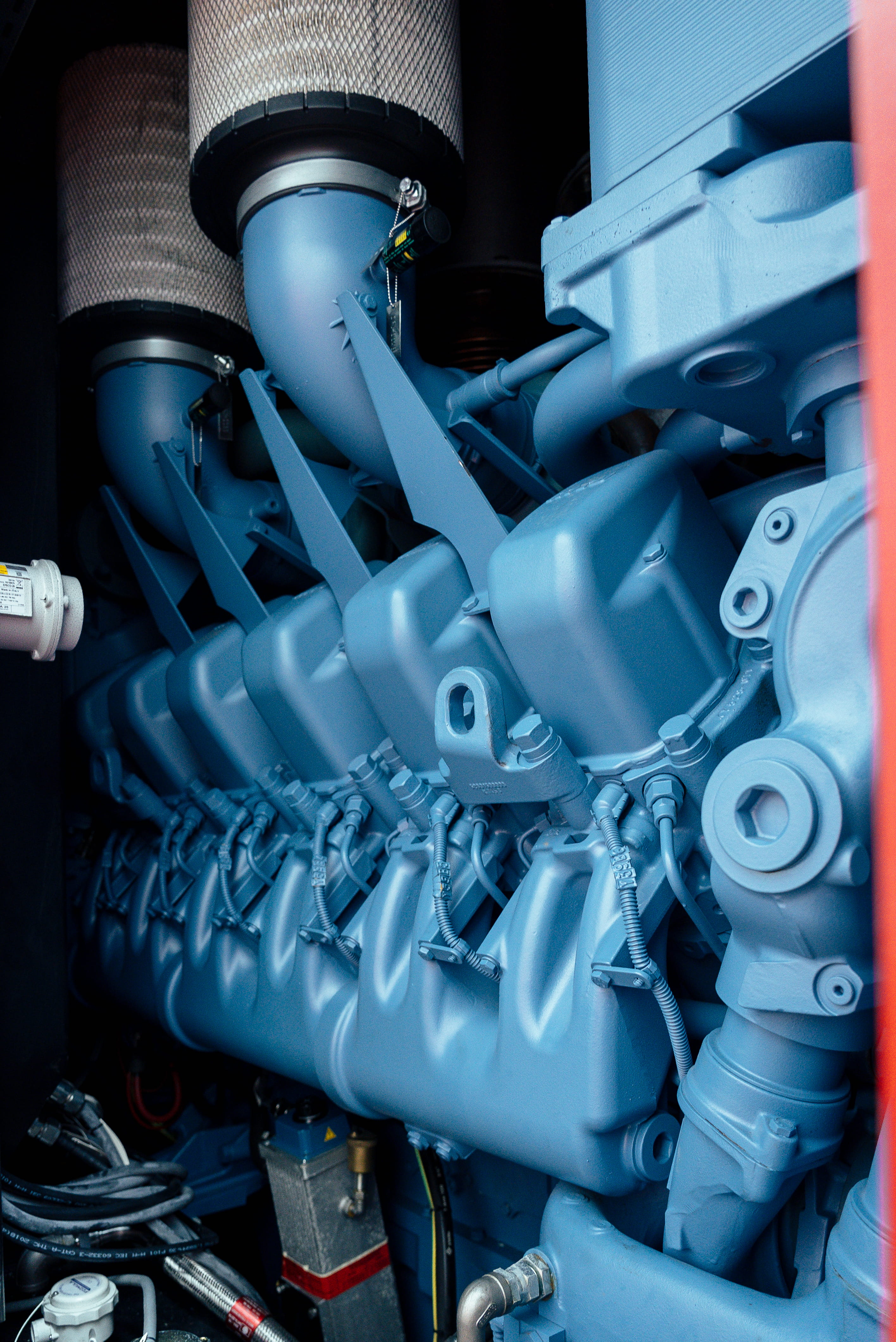
Engine
Powers the generator
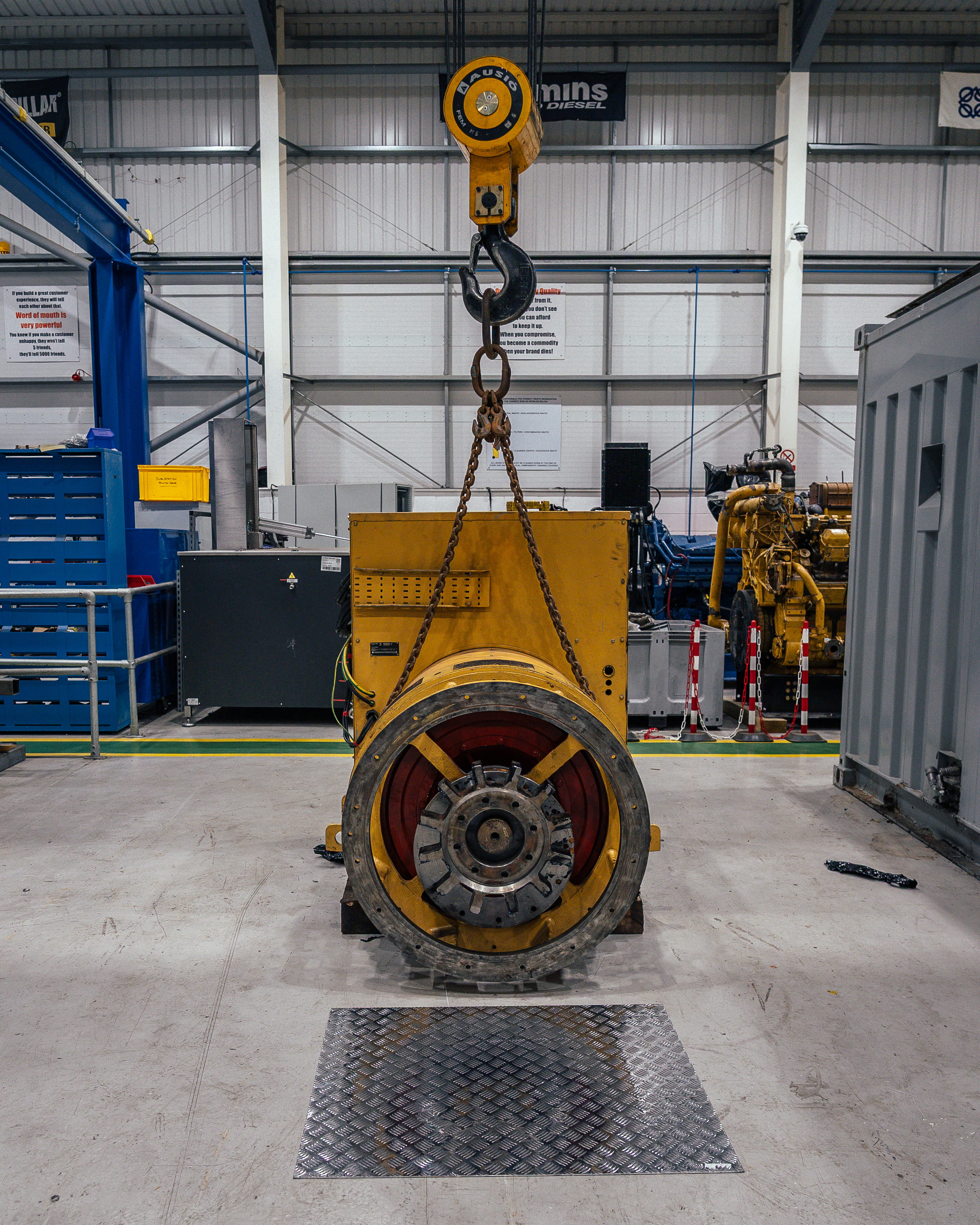
Alternator
Provides electrical energy
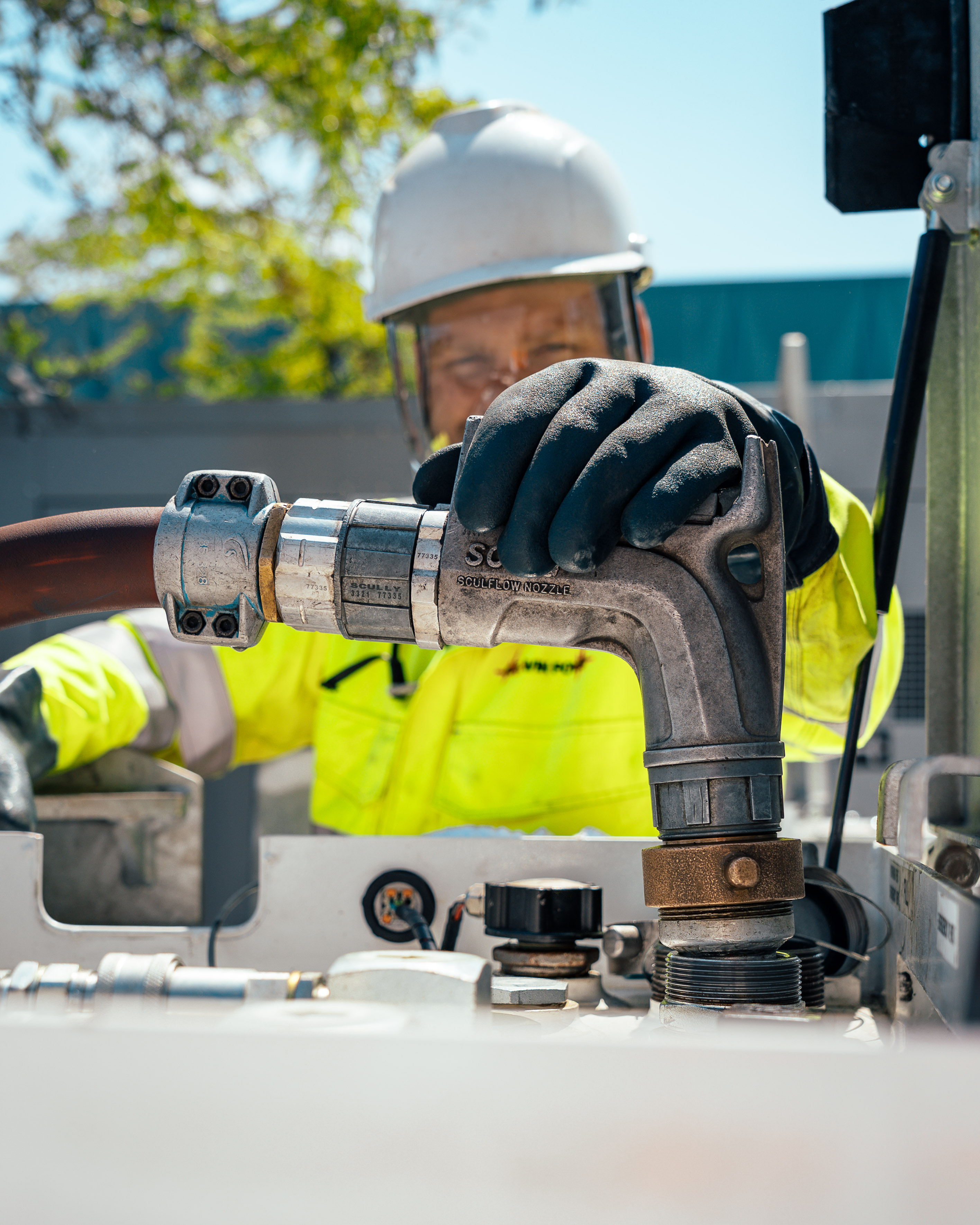
Fuel System
Provides continuous fuel
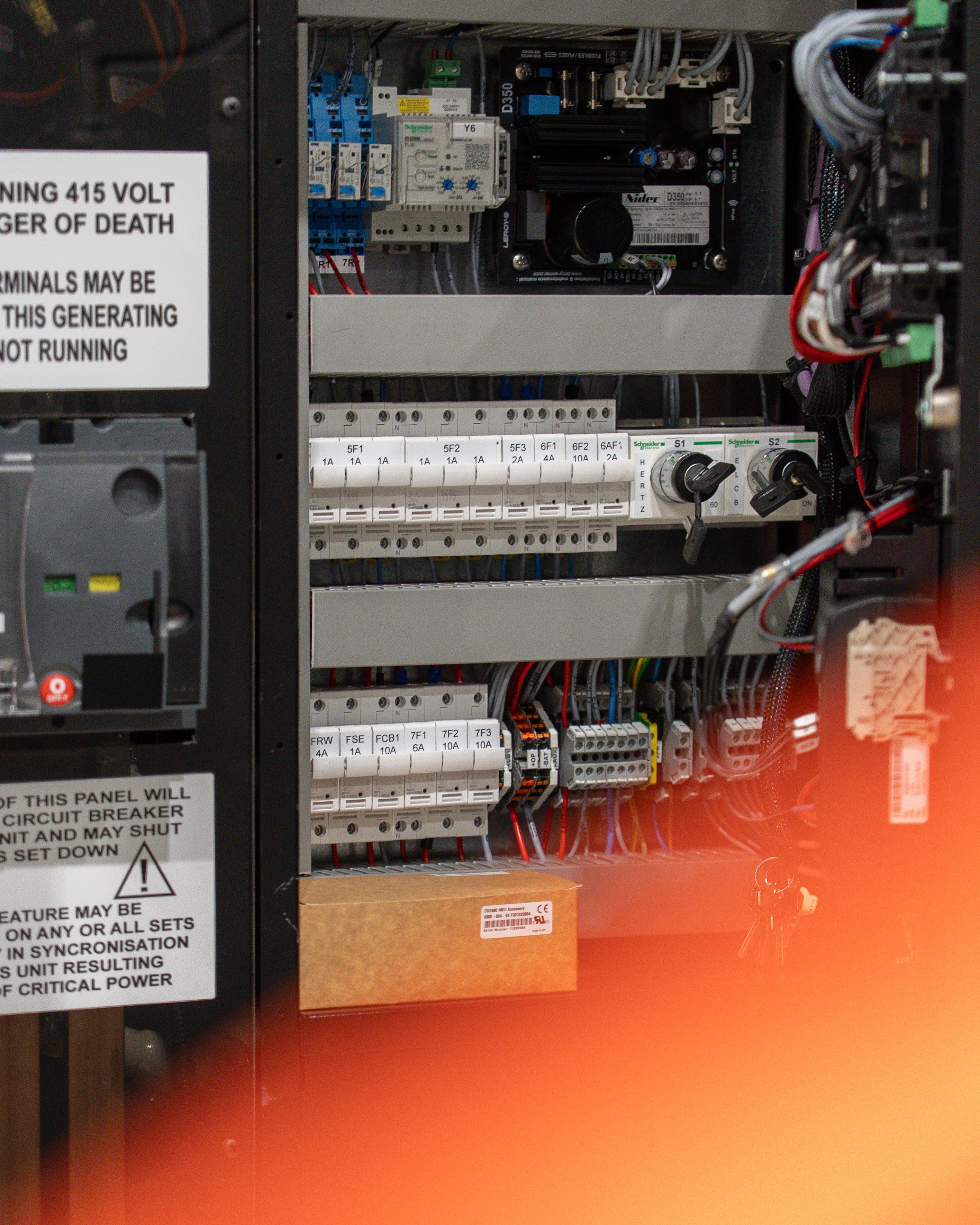
Control Panel
Monitors status
How Long Does It Take for a Backup Generator to Kick In?
Upon detection of an outage, a backup generator will deliver electricity to specific equipment, essential circuits, or the entire building – it typically kicks in and restores power within 30 seconds of a power outage. However, if zero-second interruption is required an Uninterruptible Power Supply (UPS) is used to cover the gap while the generator starts.
It’s important to note that factors such as cold weather and system maintenance can affect start-up times.
Benefits of a Backup Generator
Of course, the main benefit of a commercial backup generator is that it ensures business continuity in the event of an outage. Other advantages include:
- Peace of mind during emergencies – Knowing that your business is prepared for the unexpected provides security.
- Long term solution to frequent, short-term problems – A permanent backup system avoids outage-related disruptions. The cost savings also outweigh the initial investment.
- No manual intervention – Backup generators can be equipped with an Automatic Transfer Switch, meaning you do not need to manually turn on the generator – saving time (and money!).
- Enhanced safety and security – Generators maintain power for essential safety systems like lighting, security alarms, surveillance cameras, and fire suppression systems. This helps protect employees, customers, and the property from potential safety hazards or unauthorised access during an outage.
Where Backup Generators Are Most Commonly Used
Backup generators are most commonly used in environments where continuous, reliable power is critical for safety, security, or preventing significant financial loss. Their usage is particularly common in storm-prone or remote locations.
Do Hospitals Have Backup Generators?
Hospitals are legally required to have comprehensive contingency plans in place in order to keep power in any situation. These plans will include a detailed risk assessment to identify the most critical equipment and systems to prioritise the electrical energy flow.
Do Supermarkets Have Backup Generators?
The retail industry is particularly vulnerable when a power outage strikes. For example, supermarkets rely heavily on the refrigeration of their products, and without a stable flow of power they risk major loss of stock. In addition, even a short outage can compromise food integrity and make the stock become unsafe for consumption.
Do Schools Have Backup Generators?
The education sector has seen some big changes in the past few years, with one major change being the growing reliance on technology in classrooms. A power outage means access to digital resources is lost, sensitive equipment could be damaged and access to critical infrastructure like lighting, heating and security is cut off. Every site needs a plan to keep students, staff and systems moving.
How Pleavin Power Helps with Emergency Commercial Backup Power
Backup generators are essential systems that ensure continuous power when the main electrical supply fails. By automatically detecting outages, starting up, and supplying reliable electricity through an automatic transfer switch, these generators protect businesses from costly downtime, operational disruption, and safety risks.
Whether it’s safeguarding critical infrastructure or keeping everyday life running smoothly, a well-maintained backup generator is a vital investment in resilience and continuity.