Power cuts can be hugely disruptive to businesses of all sizes. It can cause core operations to grind to a halt, and this downtime can be expensive – both financially and reputationally. It can even lead to serious safety issues.
Unfortunately, power outages tend to be more common during winter, as there’s more likelihood of extreme weather and storms. But why does power go out during storms, and is there anything businesses can do to prepare or prevent it?
Why Storms Cause Power Outages
Storms can put significant stress on the mains electricity network. The typical weather during a storm – high winds, heavy rain, lightning and flooding – can all affect power infrastructure. Particularly vulnerable are overhead lines and substations, but storms can cause issues in many different ways.
When faults are detected or conditions become unsafe, the companies responsible for electricity supply and maintenance of the network may take the decision to shut down sections of the grid. This could be essential to preventing further damage, and giving engineers time to fix problems and make repairs.
This is why storms make the power go out more frequently than other types of extreme weather. It’s because they can create multiple points of failure across the network, often all at the same time and with very little warning.
Common Reasons the Power Goes Out During a Storm
Now, let’s take a look at some of the most common reasons the power goes out during a storm:
- High winds can bring down overhead power lines, or trees which can fall and damage cables or other infrastructure
- Heavy rainfall and flooding can affect substations and underground equipment, as the water table rises
- Lightning strikes can cause power surges or transformer failures
- Debris and structural damage can interfere with local power distribution.
Why Power Fails in Severe Weather
A storm itself may be short-lived, but the power outage and knock-on effects on national and local power supplies can last a lot longer.
A key reason for this is that there is usually damage to be repaired after a storm, but extreme weather conditions can make it difficult for these repairs to be done. For example, it may be unsafe for engineers to enter flooded areas to repair damaged infrastructure, or for specialist vehicles to access roads to remove fallen trees.
There’s also the issue of increased demand on the system. While it isn’t always the case, storms often happen in winter. During this colder, darker season, households and businesses may rely more heavily on lighting and heating. Just after a storm, this demand for electricity can surge significantly – putting even more pressure on an already beleaguered system.
Older infrastructure is particularly vulnerable to storm-related damage, along with local networks that are already stretched to maximum capacity. It doesn’t take much to cause a chain of events that result in the power being out for long stretches of time.
What to Do When a Storm Knocks Out Power
So, what should your business do if a storm causes a power outage? Every organisation should have a contingency plan in place for such an event. This should include immediate actions to take on the spot, as well as long-term preparation strategies to make the business more resilient to weather-related outages in the future.
Let’s start with what to do the moment the power goes out:
- Prioritise staff safety and emergency lighting
- Shut down sensitive equipment where possible
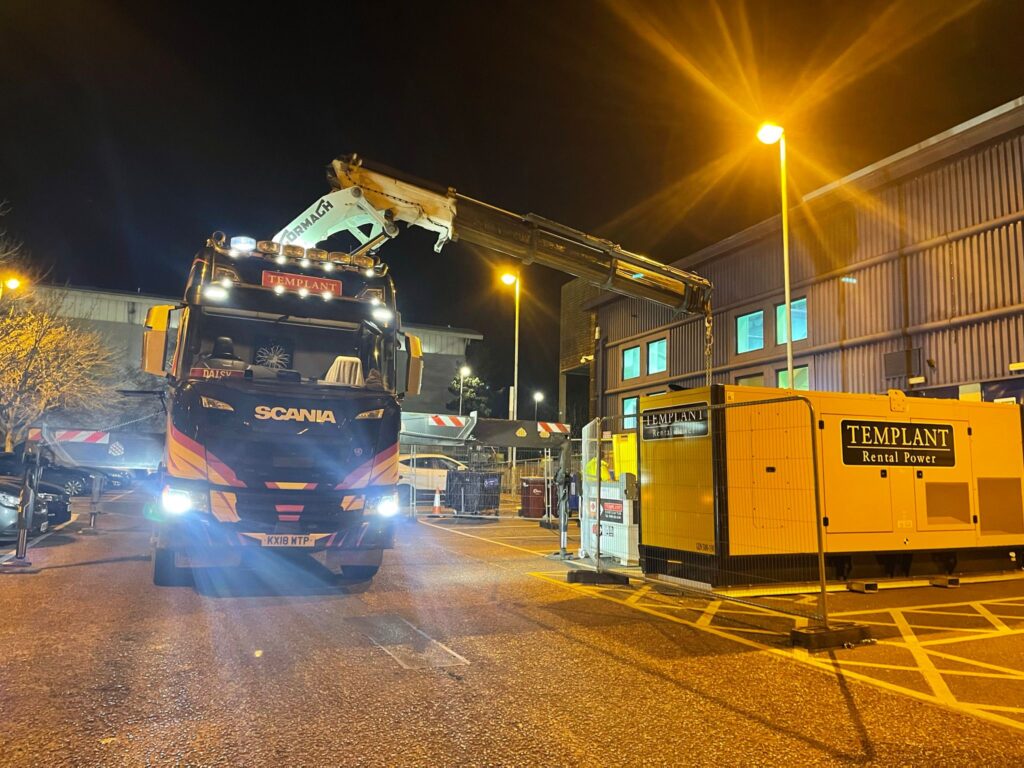
- Use backup power systems to maintain critical operations.
In terms of long-term contingency planning, a good place to start is with an in-depth risk assessment. You need to assess how power outages affect operations, identifying vulnerable areas and drawing up a list of mission-critical operations which should be prioritised during a power cut.
These operations can then be supported by an emergency backup power solution such as a generator – and this should form the next part of your contingency plan.
It’s a good idea to work with a specialist, who can carry out professional power quality surveys and develop a tailored solution. They can also design, deliver, install and maintain your generator, as well as carrying out regular servicing and remote monitoring.
How Pleavin Power Can Help
Here at Pleavin Power, we aim to support businesses before, during and after storm-related power outages.
From designing reliable backup and standby generator solutions to providing temporary power and resilience planning, our experts help you keep core operations online even when the grid fails.
You can count on us in a storm or any other emergency, as we offer 24/7 disaster recovery and support, with fast response times.
Whether you need help starting your generator in a storm, installing a temporary generator or planning ahead to mitigate future risks – we’re here to help.